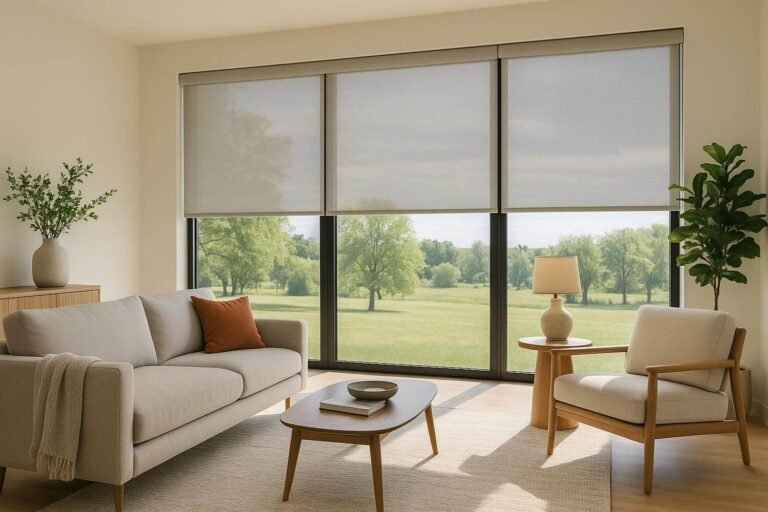
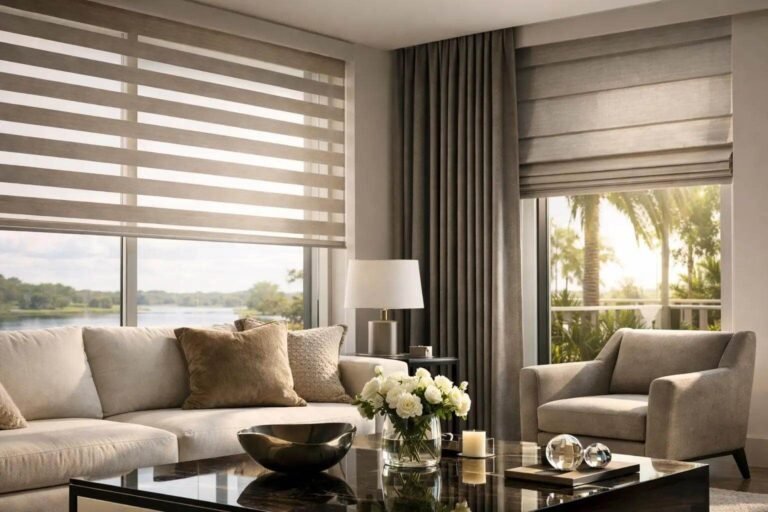
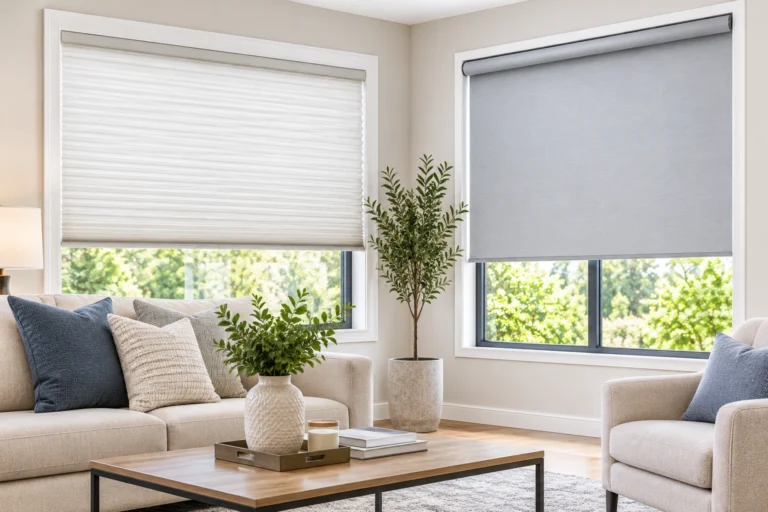
Custom blinds for new homes help Orange County homeowners create privacy, manage sunlight, and complete the look of a newly built property. Whether you are moving into a newly constructed house or purchasing a recently built home, choosing the right window coverings can make every room more comfortable and functional.
New homes often feature different window sizes, large glass areas, modern architectural details, and open floor plans. Standard window coverings may not provide the dimensions, appearance, or features you want. Custom blinds, shades, and shutters give you more flexibility to select materials, colors, and operating systems that suit your home.
For homeowners in Irvine, Anaheim, Costa Mesa, Newport Beach, Huntington Beach, and surrounding Orange County communities, the right window treatments can help manage bright sunlight, reduce glare, improve privacy, and complement interior design.
In this guide, we compare popular custom blinds and shades, explain what to consider for different rooms, and cover important details to review before ordering window coverings for your new home.
Why Choose Custom Blinds for a New Home?
New homes often have different window dimensions, layouts, and architectural details. Standard window coverings may not provide the appearance, dimensions, or features you want.
Custom blinds allow you to select products according to your window measurements and preferences.
Here are several reasons homeowners consider custom window coverings.
1. A More Tailored Appearance
Custom blinds can be selected to complement your home’s interior design, including flooring, wall colors, cabinetry, furniture, and architectural details.
You can compare different finishes, colors, materials, and styles to create a consistent look throughout your home.
2. More Options for Different Window Sizes
New homes may have large living-room windows, narrow bathroom windows, tall bedroom windows, or sliding glass doors.
Made-to-measure products provide more flexibility than relying exclusively on standard retail dimensions, subject to the manufacturer’s available sizes and specifications.
3. Greater Control Over Privacy
Privacy needs vary from room to room.
Bedrooms and bathrooms generally require more privacy than living spaces overlooking a private backyard. Custom blinds and shades allow you to select different materials and light-control features according to each room’s requirements.
4. More Control Over Natural Light
Large windows can make a new home feel bright and open, but direct sunlight can also cause glare and discomfort.
Choosing appropriate window coverings helps you manage incoming light while maintaining the appearance and functionality you want.
5. More Choices for Operating Systems
Depending on the selected product, you may choose manual operation or motorization.
Motorized window coverings can be particularly useful for large windows, multiple shades, and hard-to-reach locations.
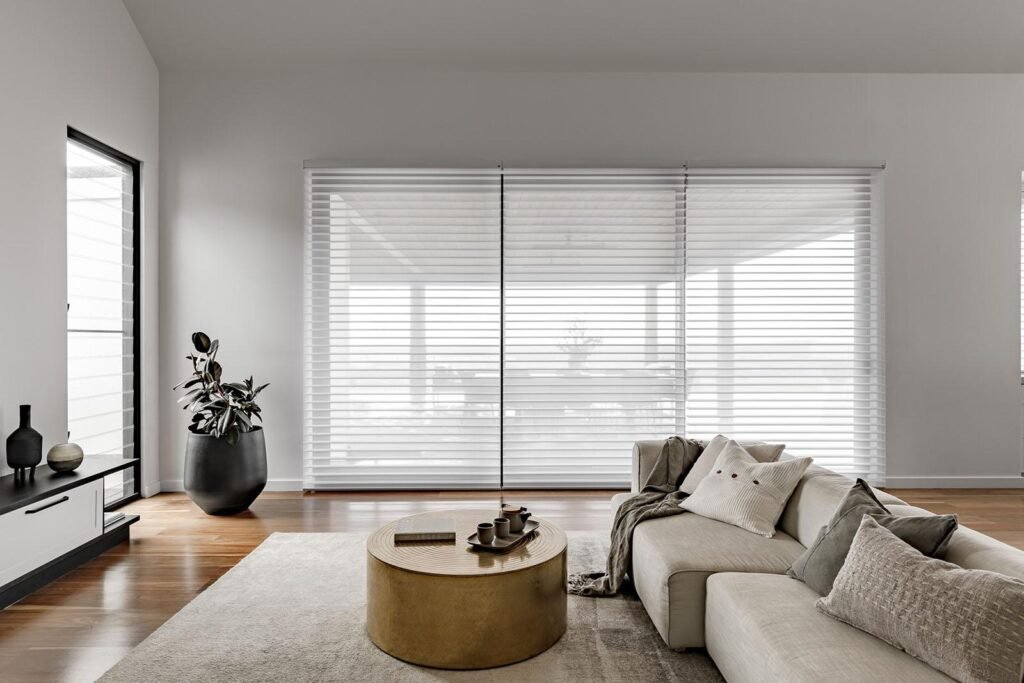
Best Types of Custom Blinds and Shades for New Homes
There are several types of window coverings worth considering when furnishing a new property. The best option depends on your preferred style, privacy requirements, light-control needs, and budget.
1. Faux Wood Blinds
Faux wood blinds are a popular option for homeowners who like the appearance of traditional wood blinds but want an alternative material.
They typically feature horizontal slats that can be tilted to adjust incoming light and privacy.
Benefits include:
- A classic appearance that suits many interior styles
- Adjustable slats for light control
- A variety of colors and finishes
- A practical option for many living spaces
- Materials that are often suitable for rooms where humidity is a consideration, depending on product specifications
Faux wood blinds can work well in living rooms, bedrooms, offices, and other areas where adjustable light control is important.
For kitchens and bathrooms, check the manufacturer’s moisture-resistance specifications before choosing a product.
2. Wood Blinds
Wood blinds offer a natural appearance that can complement traditional, transitional, and contemporary interiors.
They are available in different finishes and colors, making it possible to coordinate them with furniture, flooring, and cabinetry.
Benefits include:
- Natural wood appearance
- Adjustable slats for light and privacy control
- Different stain and paint finishes
- A warm, decorative look
Wood blinds may be a good choice for bedrooms, living rooms, and home offices. However, they may not be appropriate for areas with frequent moisture exposure unless the product is specifically designed for those conditions.
3. Roller Shades
Roller shades use a single piece of fabric that rolls around a tube at the top of the window.
Their simple appearance makes them suitable for many modern homes, particularly those with minimalist interiors and large windows.
Roller shades are available in different fabric types, including:
- Light-filtering fabrics
- Room-darkening fabrics
- Blackout fabrics
- Decorative fabrics
Benefits include:
- A clean and streamlined appearance
- Different fabric and color choices
- Simple operation
- Options for different levels of light control
- Compatibility with motorized operating systems on selected models
Roller shades are worth considering for living rooms, bedrooms, offices, and other areas where a simple window treatment is preferred.
4. Solar Shades
Solar shades use specialized screen fabric designed to reduce glare and help manage sunlight while preserving some visibility to the outdoors.
They can be particularly useful in Orange County homes with large windows and strong afternoon sunlight.
Benefits include:
- Reduced direct glare, depending on fabric specifications
- Some preservation of outdoor views during daylight
- Different fabric openness options
- A modern appearance
- Options for manual or motorized operation
Solar shades are commonly considered for living rooms, offices, and windows with significant sun exposure.
An important consideration is nighttime privacy. When interior lights are on and it is darker outside, solar screen fabrics generally do not provide dependable privacy. A different shade type or an additional window covering may be necessary.
5. Cellular Shades
Cellular shades, also called honeycomb shades, have a structured design with air pockets inside the fabric.
These pockets can provide an insulating layer between the window and the room. Their performance depends on the shade’s construction, fit, window type, and installation details.
Benefits include:
- Honeycomb construction designed to help reduce heat transfer
- Different light-filtering and blackout options
- A soft, simple appearance
- Options for different window sizes
- Manual and motorized models, depending on the product
Cellular shades are worth considering for bedrooms, living areas, and rooms where insulation and light control are priorities.
6. Plantation Shutters
Plantation shutters feature a solid frame and adjustable louvers. They offer a distinctive architectural appearance and can complement both traditional and contemporary homes.
Benefits include:
- A structured, built-in appearance
- Adjustable louvers for light and privacy control
- Different material and finish options
- A durable option when the product is properly selected and maintained
Plantation shutters can be considered for living rooms, bedrooms, dining rooms, and other areas where a more architectural window treatment is desired.
Before ordering, check the product specifications and confirm that the shutter design is suitable for your window dimensions and surrounding trim.
Which Window Coverings Work Best in Each Room?
A new home usually has several types of rooms, and each one has different requirements. Instead of selecting the same window covering for every window, consider how each space is used.
Living Room
Living rooms often have large windows that bring in natural light and provide outdoor views.
Suitable options include:
- Solar shades for glare management and daytime views
- Roller shades for a simple, modern appearance
- Faux wood blinds for adjustable light control
- Plantation shutters for a more traditional or architectural style
If your living room receives strong afternoon sunlight, compare fabric specifications and light-control features before selecting a product.
Bedrooms
Bedrooms generally require more privacy and control over incoming light.
Consider:
- Blackout roller shades
- Blackout cellular shades
- Room-darkening shades
- Faux wood blinds
- Plantation shutters
Blackout fabric can block light through the fabric itself, but light may still enter around the edges depending on the shade design, window dimensions, and mounting configuration.
If minimizing outside light is important, review the product’s specifications and consider whether an appropriate mounting arrangement or additional light-blocking features are needed.
Kitchen
Kitchen window coverings should be practical and easy to maintain.
Potential options include:
- Faux wood blinds
- Roller shades
- Selected moisture-resistant shade materials
Consider how close the window is to a sink, cooking area, or other source of moisture and heat. Always check the manufacturer’s cleaning and material recommendations.
Bathrooms
Bathrooms require careful consideration of privacy and humidity.
Potential options include:
- Moisture-resistant faux wood blinds
- Suitable privacy roller shades
- Other window coverings specifically rated for the bathroom environment
Avoid choosing a product solely because of its appearance. Check its moisture-resistance specifications and cleaning requirements.
Home Office
A home office may need glare control for computer screens while maintaining a comfortable level of natural light.
Consider:
- Solar shades
- Light-filtering roller shades
- Cellular shades
- Motorized shades for convenient adjustments
Solar screen fabric can be particularly useful where daylight glare is a concern, although its nighttime privacy performance is limited.
Dining Room
Dining rooms are often designed around appearance and atmosphere.
Consider:
- Wood blinds
- Faux wood blinds
- Roller shades
- Plantation shutters
Choose a style that coordinates with the room’s furniture, lighting, and overall interior design.
Should You Choose Motorized Blinds for a New Home?
Motorized blinds and shades are worth considering when planning window coverings for a new property.
Instead of operating each window covering manually, motorized products use an electric system to raise, lower, or adjust the selected treatment.
Depending on the model, motorized products may offer:
- Remote-control operation
- Wall-switch operation
- Smartphone control
- Scheduling features
- Smart-home compatibility
- Convenient operation for hard-to-reach windows
Not every motorized product supports every feature. Confirm compatibility, power requirements, and control options before ordering.
Where Motorization Makes the Most Sense
Motorized window coverings can be especially useful for:
- Large living-room windows
- Tall or difficult-to-reach windows
- Multiple windows in an open-plan space
- Bedrooms where convenient light adjustment is important
- Homes with compatible smart-home systems
If you are considering motorized options, explore motorized blinds and motorized shades.
You can also learn more about smart motorized blinds.
What to Consider Before Ordering Custom Blinds for a New Home
Before purchasing window coverings, review the following details to help avoid ordering products that do not meet your requirements.
1. Measure Every Window Carefully
Do not assume that every window in a new home has identical dimensions.
Measure each window individually and follow the measuring instructions provided for the specific product.
Depending on the window covering and mounting method, you may need to consider:
- Window width
- Window height
- Window depth
- Frame shape
- Window handles and other obstructions
- Inside-mount or outside-mount requirements
Measurement requirements vary by product. Do not apply one product’s measuring instructions to another without checking the manufacturer’s guidance.
2. Decide Between Inside Mount and Outside Mount
An inside mount places the window covering within the window frame or recess.
An outside mount places it on the wall, trim, or another suitable surface outside the window opening.
Inside mount considerations:
- Creates a neat, integrated appearance
- Leaves more of the window trim visible
- Requires sufficient depth and suitable mounting conditions
- May allow some light around the edges
Outside mount considerations:
- Can cover more of the window opening
- May be useful when the recess is not deep enough
- Can help reduce some edge light when designed appropriately
- Requires suitable mounting space and surfaces
The correct option depends on the product, window construction, available space, and desired appearance.
3. Choose the Right Material
Different materials suit different rooms and conditions.
For example:
- Faux wood can be practical in rooms where humidity is a consideration, depending on the product.
- Natural wood provides a warm, decorative finish.
- Roller shade fabrics offer different levels of light control.
- Solar screen fabrics help manage glare while retaining some daytime visibility.
- Cellular shades offer a honeycomb structure designed to help with insulation.
- Plantation shutters provide a structured appearance and adjustable louvers.
Review the manufacturer’s specifications before choosing a material.
4. Think About Privacy and Light Control
Consider how much natural light you want in each room and how much privacy you need.
A bedroom may require blackout or room-darkening fabric, while a living room may benefit from light-filtering or solar screen material.
Remember that blackout fabric does not automatically eliminate all light entering around the edges. Likewise, solar shades are not reliable nighttime privacy coverings.
5. Check Motorization and Power Requirements
If you are considering motorized blinds or shades, review the available power options before placing your order.
Depending on the product, options may include rechargeable batteries, replaceable batteries, or hardwired power.
Check:
- Whether a power source is required
- Battery charging or replacement requirements
- Remote-control compatibility
- Smart-home compatibility
- Whether additional accessories are needed
Planning these details early can help avoid surprises after the products arrive.
6. Review Product Specifications
Before confirming an order, check the full product details.
Important information may include:
- Finished product dimensions
- Available colors and finishes
- Fabric opacity
- Material composition
- Operating mechanism
- Mounting requirements
- Motorization options
- Warranty terms
- Manufacturing and delivery timelines
- Return and order-change policies
Custom-made products may have different cancellation and return conditions from standard ready-made products. Review the applicable terms before ordering.
How Much Do Custom Blinds for New Homes Cost?
The cost of custom window coverings depends on several factors, so there is no single price that applies to every new home.
Important pricing factors include:
- Window dimensions
- Number of windows
- Product type
- Material and fabric selection
- Customization options
- Motorization
- Control systems
- Special window shapes or configurations
For example, a basic manual roller shade may have a different product price from a motorized cellular shade or a plantation shutter.
Larger windows generally require more material, and specialized operating systems can increase the product cost.
When comparing prices, make sure you are comparing equivalent products with similar dimensions, materials, features, and specifications.
Important: Product prices and installation costs are separate. Blackout Blinds & Shutters sells window-covering products and does not provide installation services. Customers who require installation must arrange it independently.
Common Mistakes to Avoid When Choosing Window Coverings for a New Home
A little planning can help you avoid unnecessary expenses and product-selection problems.
Mistake 1: Choosing the Same Product for Every Room
Different rooms have different privacy, light-control, and moisture requirements.
Choose window coverings according to how each room is used rather than selecting one style for the entire property without considering those differences.
Mistake 2: Ignoring Window Measurements
Incorrect measurements can result in products that do not fit the intended opening.
Measure every window separately and follow the exact instructions for the product and mounting method.
Mistake 3: Choosing Style Without Considering Function
A window covering may look attractive but still fail to provide the privacy or light control you need.
Consider both appearance and practical requirements before ordering.
Mistake 4: Overlooking Afternoon Sunlight
Some Orange County homes have windows that receive strong afternoon sunlight.
If glare or heat is a concern, compare solar shades, cellular shades, and other suitable options based on their actual specifications.
Mistake 5: Forgetting About Motorization
If you want motorized window coverings, consider them before ordering rather than assuming every manual product can be converted later.
Check the available motorization options for the exact product you intend to purchase.
Mistake 6: Not Reviewing Order Policies
Custom products may be manufactured according to the dimensions and specifications supplied with the order.
Review measurements, colors, materials, operating systems, delivery expectations, and return policies before confirming your purchase.
Frequently Asked Questions
1. What are the best blinds for a newly built home?
The best option depends on your preferred appearance, privacy needs, window dimensions, and light-control requirements. Faux wood blinds, roller shades, cellular shades, solar shades, and plantation shutters are all worth considering.
2. Are custom blinds better than standard blinds?
Custom blinds provide more flexibility in dimensions, materials, colors, and features. Standard blinds may be suitable for some windows, but custom products can offer more options for homeowners with specific design or measurement requirements.
3. Are motorized blinds worth considering in a new home?
Motorized blinds can be useful for large windows, hard-to-reach areas, and homeowners who want convenient operation. Their value depends on your preferences, budget, and the features available with the selected product.
4. Are cellular shades suitable for Orange County homes?
Cellular shades can be a useful option because their honeycomb construction is designed to help reduce heat transfer. Actual performance depends on the shade design, fit, window type, and other conditions.
5. Do blackout shades completely block all sunlight?
Blackout fabric is designed to block light through the fabric. However, light may still enter around the edges depending on the product design, window dimensions, and mounting arrangement.
6. Are solar shades good for bedrooms?
Solar shades can help manage daylight glare, but they generally do not provide dependable nighttime privacy. For bedrooms where privacy and darkness are priorities, consider blackout or room-darkening shades instead.
7. Should all windows in a new home have matching blinds?
Not necessarily. You can create a consistent interior design while selecting different window-covering types for individual rooms. For example, you might choose solar shades for a bright living room and blackout shades for bedrooms.
8. Does Blackout Blinds & Shutters provide installation?
No. Blackout Blinds & Shutters sells window-covering products and does not provide installation services. Customers must install the products themselves or arrange installation independently through a separate provider if professional installation is required.
Find the Right Custom Blinds for Your Orange County Home
Choosing window coverings is an important part of completing a new home. The right products can help manage natural light, improve privacy, complement your interior design, and make everyday living more convenient.
Whether you prefer faux wood blinds, roller shades, solar shades, cellular shades, plantation shutters, or motorized window coverings, compare the available features and specifications before making your decision.
Blackout Blinds & Shutters offers window-covering products for homeowners looking to explore options for their properties in Orange County, California.
Browse the available window blinds or visit the Blackout Blinds & Shutters homepage to learn more.
Have questions about product options? Contact Blackout Blinds & Shutters to discuss your window-covering requirements.