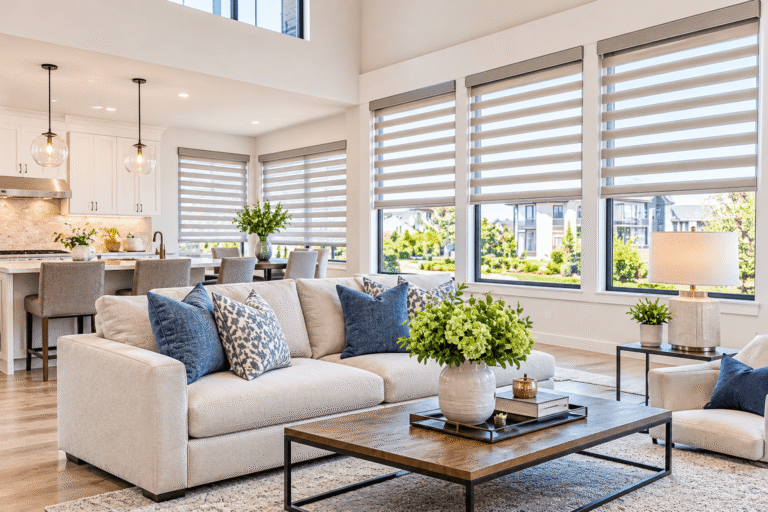
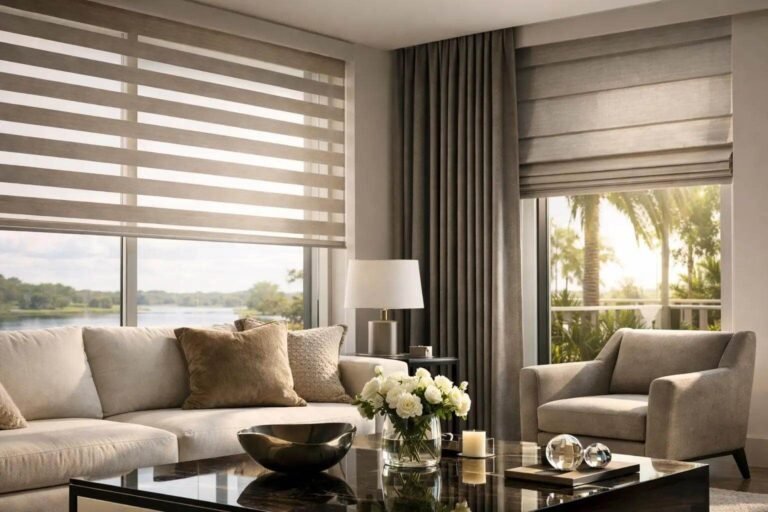
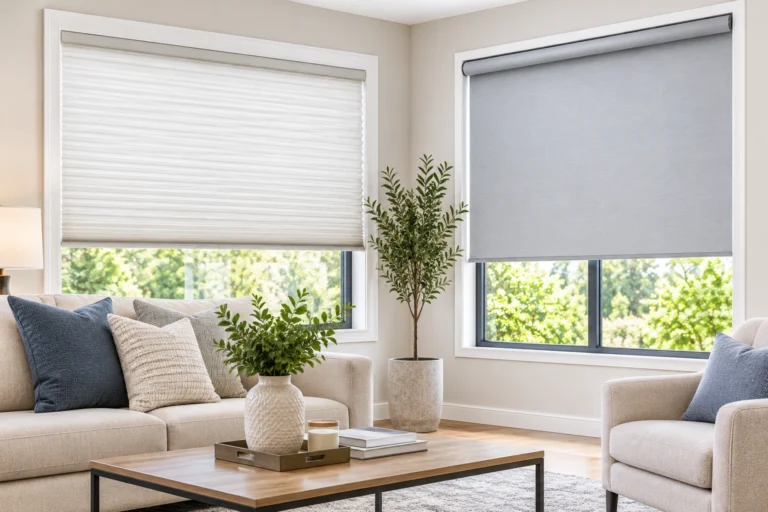
How to choose window shades is an important question for homeowners who want the right balance of privacy, natural light, comfort, and interior style. With so many fabrics, designs, and operating options available, selecting the right window shades can feel overwhelming. The best choice depends on your windows, how each room is used, and the amount of light and privacy you want.
For homeowners in Orange County, California, window shades can also help manage bright sunlight and glare, particularly in rooms with large windows or strong afternoon sun. Whether you live in Irvine, Anaheim, Costa Mesa, Newport Beach, Huntington Beach, or another Orange County community, understanding the differences between shade types can make your purchasing decision easier.
This guide explains the most popular types of window shades, compares their features, and provides practical advice for choosing the right options for every room in your home.

1. Understand the Different Types of Window Shades
Before choosing window shades, learn how the main styles differ. Each type offers different benefits for privacy, light control, appearance, and everyday use.
Roller Shades
Roller shades are made from a single piece of fabric that rolls around a tube positioned at the top of the window. Their simple design makes them suitable for many contemporary and traditional interiors.
Roller shades are available in different fabric options, including light-filtering, room-darkening, and blackout materials.
Benefits of roller shades:
- Clean and streamlined appearance
- Wide selection of colors and fabrics
- Different levels of light control
- Suitable for many window sizes
- Available with manual or motorized operation, depending on the product
Best for: Living rooms, bedrooms, home offices, and other spaces where a simple, versatile window covering is preferred.
Solar Shades
Solar shades use specialized screen fabric designed to reduce glare and manage sunlight while preserving some visibility to the outdoors.
They are worth considering for Orange County homes with large windows, bright living spaces, or rooms that receive strong direct sunlight.
Benefits of solar shades:
- Help reduce daylight glare
- Preserve some outdoor visibility during the day
- Available in different fabric openness levels
- Offer a modern, minimal appearance
- Available with motorized options on selected models
Best for: Living rooms, home offices, and windows where daytime glare management and outdoor views are priorities.
Important privacy consideration: Solar shades generally do not provide dependable nighttime privacy. When interior lights are on and it is darker outside, people may be able to see into the room. Consider another shade type or an additional window covering if nighttime privacy is important.
Cellular Shades
Cellular shades, also known as honeycomb shades, have a structured design with air pockets inside the fabric.
These air pockets are designed to provide an insulating layer between the window and the room. Their actual performance depends on the product construction, fit, window type, and other conditions.
Benefits of cellular shades:
- Honeycomb construction designed to help reduce heat transfer
- Available in different light-filtering and blackout options
- Soft, understated appearance
- Suitable for bedrooms and living areas
- Manual and motorized options available on selected models
Best for: Bedrooms, living rooms, and spaces where insulation and light control are important considerations.
Blackout Shades
Blackout shades use fabric designed to block light through the material itself. They are a popular choice for bedrooms and other spaces where reducing incoming light is a priority.
Benefits of blackout shades:
- Block light through the fabric
- Help create a darker sleeping environment
- Available in different colors and designs
- Can be selected in roller or cellular shade styles
- Suitable for bedrooms and media rooms
Best for: Bedrooms, nurseries, and media rooms.
Keep in mind that blackout fabric does not necessarily eliminate all outside light. Light may still enter through gaps around the edges, depending on the shade design, window dimensions, and mounting configuration.
Light-Filtering Shades
Light-filtering shades allow natural light to enter while softening its intensity. They provide an alternative to heavier room-darkening and blackout fabrics.
Benefits of light-filtering shades:
- Soften incoming daylight
- Help reduce harsh brightness
- Provide a softer appearance than many opaque coverings
- Available in different fabrics and colors
- Suitable for spaces where natural light is desirable
Best for: Living rooms, dining rooms, and other areas where you want daylight without completely exposing the interior.
2. Decide How Much Light Control You Need
One of the most important factors when choosing window shades is deciding how much natural light you want in each room.
Different fabrics provide different levels of light control. Consider the room’s purpose and the direction of the window before selecting a shade.
Light-Filtering Fabrics
Light-filtering fabrics soften daylight while allowing some natural light into the room.
They can be suitable for living rooms, dining rooms, and spaces where you want a bright atmosphere without direct glare.
Room-Darkening Fabrics
Room-darkening fabrics reduce the amount of incoming light more substantially than many light-filtering options.
They can be useful for bedrooms, guest rooms, and spaces where a darker environment is preferred.
Blackout Fabrics
Blackout fabrics are designed to block light through the fabric.
They are worth considering for bedrooms, nurseries, and media rooms where minimizing incoming light is important. However, the overall result also depends on edge gaps and the shade’s mounting arrangement.
Solar Screen Fabrics
Solar screen fabrics are designed to manage glare and sunlight while allowing some visibility through the material.
Their performance depends on the fabric’s openness, color, composition, and other specifications.
When comparing solar shades, ask about the available openness factors and review the manufacturer’s product details.
3. Consider Privacy Requirements
Privacy is another major factor when choosing window shades.
A window facing a busy street has different requirements from one overlooking a private backyard. Similarly, bedroom and bathroom windows generally need more privacy than some living-room windows.
Consider the following:
- Bedrooms: Choose room-darkening or blackout options if privacy and reduced light are priorities.
- Bathrooms: Select a shade that provides suitable privacy and is appropriate for the room’s humidity.
- Living rooms: Consider light-filtering shades or other options based on window location and visibility from outside.
- Home offices: Choose a product that balances screen-glare control with your preferred level of privacy.
Remember that fabric transparency and privacy can change depending on lighting conditions. A fabric that provides daytime privacy may offer less privacy at night when the room is illuminated.
4. Choose Window Shades According to Each Room
You do not need to use the same shade throughout your entire home. Selecting window coverings based on each room’s function can provide a better balance of appearance and practicality.
Living Room
Living rooms often have larger windows and are used throughout the day.
Suitable choices include:
- Solar shades for glare management and daytime views
- Light-filtering roller shades for softer natural light
- Cellular shades where insulation is a consideration
- Decorative roller shades to complement the interior
If the room receives strong afternoon sunlight, compare the specifications of different solar and light-filtering fabrics before ordering.
Bedroom
Bedrooms usually require more privacy and light control.
Consider:
- Blackout roller shades
- Blackout cellular shades
- Room-darkening shades
- Motorized shades for convenient operation
If you are sensitive to outside light while sleeping, review the product’s light-blocking features and consider how the shade will cover the window opening.
Kitchen
Kitchen shades should be practical and suitable for the conditions near the window.
Potential options include:
- Roller shades
- Selected faux wood blinds
- Materials specifically designed for areas where humidity may be present
Check the manufacturer’s cleaning instructions and moisture-resistance specifications before choosing a product for a window near a sink or cooking area.
Bathroom
Privacy and moisture are important considerations in bathrooms.
Choose a product with suitable privacy characteristics and confirm that its material is appropriate for humid conditions.
Do not assume that every fabric shade is suitable for a bathroom. Check the manufacturer’s recommendations.
Home Office
A home office may need natural light without excessive glare on computer screens.
Solar shades can be useful for managing daylight glare while retaining some outdoor visibility. Light-filtering roller shades and cellular shades are other options worth comparing.
Consider motorized operation if you frequently adjust multiple windows throughout the day.
Dining Room
Dining rooms often benefit from window coverings that complement the overall interior design.
Consider decorative roller shades, light-filtering fabrics, or cellular shades, depending on your preferred appearance and privacy requirements.
5. Think About Sun Exposure and Window Direction
Orange County homes can experience bright sunlight throughout the year. The direction a window faces can influence how much direct sunlight and glare enter a room.
East-Facing Windows
East-facing windows generally receive more direct sunlight in the morning.
Consider light-filtering shades or solar shades if morning brightness or glare is a concern.
West-Facing Windows
West-facing windows can receive strong afternoon and evening sunlight.
Solar shades may help manage glare, while cellular shades and other suitable coverings may be worth considering when comfort and insulation are priorities.
South-Facing Windows
South-facing windows can receive substantial sunlight, depending on the season, surrounding buildings, roof overhangs, and other conditions.
Compare fabrics and shade types according to the amount of sunlight entering the room.
North-Facing Windows
North-facing windows generally receive less direct sunlight than many other orientations, although surrounding structures and local conditions can affect the amount of natural light.
Light-filtering shades may be suitable when maintaining a bright interior is a priority.
No shade type guarantees a particular indoor temperature or energy saving. Results depend on the window, glazing, shade material, fit, mounting, and how the covering is used.
6. Choose the Right Color and Fabric
Window shades are functional products, but their appearance also affects the overall look of a room.
When selecting colors and fabrics, consider the following:
Match Your Interior Design
Neutral colors such as white, cream, beige, and gray can complement many interior styles.
If you want your shades to blend into the background, consider colors close to your window trim or wall finish.
For a stronger design feature, choose a fabric that adds contrast or coordinates with furniture and decorative accents.
Consider Fabric Texture
Different fabrics create different visual effects.
- Smooth fabrics provide a simple, contemporary appearance.
- Textured fabrics can add visual interest.
- Screen fabrics can create a clean, modern look.
- Decorative fabrics can complement traditional interiors.
Consider Practical Maintenance
Some materials require more careful cleaning than others.
Review the manufacturer’s cleaning instructions before choosing a fabric, especially for kitchens, bathrooms, and frequently used living spaces.
7. Decide Between Manual and Motorized Window Shades
Window shades are available with different operating systems. Manual shades are operated by hand, while motorized shades use an electric mechanism.
Manual Window Shades
Manual shades are a straightforward option for many homes.
Advantages:
- Simple operation
- No motorized power system required
- Often a practical choice for standard windows
- Wide availability across shade styles
Motorized Window Shades
Motorized shades can be controlled using a remote, wall control, or compatible smart-home system, depending on the product.
Advantages:
- Convenient operation
- Useful for large or hard-to-reach windows
- Can simplify adjusting multiple shades
- Selected models support scheduling and smart-home features
- Can provide a streamlined appearance without manual operating cords
Before choosing a motorized product, check its power source, charging or battery requirements, control options, and smart-home compatibility.
Explore motorized shades and smart motorized blinds to learn more about available motorized window-covering options.
8. Understand Window Measurements and Mounting Options
Correct measurements are important when ordering custom window shades.
Do not assume that all windows in your home have identical dimensions, even if they appear similar.
Measure each window individually and follow the manufacturer’s measuring instructions for the specific shade and mounting method.
Inside Mount
An inside mount places the shade within the window frame or recess.
Considerations:
- Provides a neat, integrated appearance
- Leaves more of the window trim visible
- Requires sufficient mounting depth
- May allow some light around the edges
Outside Mount
An outside mount places the shade on the wall, trim, or another suitable surface outside the window opening.
Considerations:
- Can cover more of the window opening
- May be suitable when the window recess lacks sufficient depth
- Can help reduce edge light when designed appropriately
- Requires suitable mounting space and surfaces
The correct mounting method depends on the product specifications, window construction, available space, and your preferred appearance.
If you are ordering made-to-measure shades, double-check all measurements and product requirements before confirming the order.
9. Compare Product Prices and Features
Window shade prices vary according to the product, dimensions, material, and available features.
Factors that can affect the product price include:
- Window size
- Shade type
- Fabric selection
- Material quality
- Customization options
- Manual or motorized operation
- Remote controls and other accessories
- Special window shapes or configurations
For example, a standard manual roller shade may have a different product price from a motorized cellular shade or a specialized blackout shade.
When comparing products, make sure you are reviewing similar dimensions, fabric specifications, operating systems, and included accessories.
Also distinguish the cost of the window-covering product from any separate installation costs.
Important: Blackout Blinds & Shutters sells window-covering products and does not provide installation services. Customers who require installation must arrange it independently through a separate provider.
10. Window Shade Buying Checklist
Before placing your order, review these points:
- Identify the purpose of each window shade.
- Decide how much light control you need.
- Determine the privacy requirements for each room.
- Compare roller, solar, cellular, and blackout shade options.
- Choose colors and fabrics that suit your interior.
- Consider the window’s direction and sun exposure.
- Decide between manual and motorized operation.
- Check power and control requirements for motorized models.
- Measure each window according to the product instructions.
- Confirm inside-mount or outside-mount requirements.
- Review product specifications, lead times, and warranty terms.
- Check cancellation, return, and order-change policies.
Taking time to review these details can help you select shades that better suit your home and avoid preventable ordering mistakes.
Frequently Asked Questions About Choosing Window Shades
1. What is the best type of window shade for a home?
There is no single best option for every home. Roller shades offer a simple appearance, solar shades help manage glare, cellular shades have an insulating honeycomb structure, and blackout shades are designed to block light through the fabric. The right choice depends on your room, privacy needs, and preferred light control.
2. What window shades are best for hot, sunny rooms?
Solar shades can help reduce glare, while cellular shades are designed to provide an insulating layer through their honeycomb construction. The best option depends on window orientation, glazing, fabric specifications, and the conditions in the room.
3. Are roller shades or cellular shades better?
Roller shades are often preferred for their simple design and wide range of fabric options. Cellular shades are worth considering when their honeycomb construction and insulation characteristics are priorities. Neither is automatically better for every room.
4. Are solar shades good for privacy?
Solar shades can provide some daytime privacy depending on the fabric and lighting conditions. However, they generally do not provide dependable nighttime privacy when the interior is illuminated.
5. Do blackout shades make a room completely dark?
Blackout fabric is designed to block light through the fabric itself. Light may still enter around the edges, depending on the shade design, mounting arrangement, and window dimensions.
6. Should I choose motorized window shades?
Motorized shades can be useful for large windows, hard-to-reach areas, and homeowners who want convenient operation. Review the power requirements, controls, and smart-home compatibility before selecting a model.
7. How do I measure windows for custom shades?
Measure each window individually and follow the instructions provided for the specific product. Requirements differ between inside-mount and outside-mount shades, so check the manufacturer’s guidance before placing an order.
8. Can I use different window shades in different rooms?
Yes. Many homeowners choose different shade types throughout the home. For example, solar shades may suit a bright living room, while blackout shades may be more appropriate for bedrooms.
9. Does Blackout Blinds & Shutters provide window shade installation?
No. Blackout Blinds & Shutters sells window-covering products and does not provide installation services. Customers must install the products themselves or arrange installation independently through a separate provider if professional installation is required.
Choose the Right Window Shades for Your Orange County Home
Choosing window shades is easier when you understand how different products perform and what each room requires. Consider privacy, natural light, fabric type, sun exposure, appearance, and operating features before making your decision.
Whether you are considering roller shades, solar shades, cellular shades, blackout shades, or motorized window coverings, comparing product specifications can help you find options that suit your home.
Blackout Blinds & Shutters offers window-covering products for homeowners in Orange County, California.
Explore the available window blinds and motorized shades to compare window-covering options.
Have questions about choosing products for your windows? Visit the Blackout Blinds & Shutters contact page to discuss your requirements.