Choosing the right window treatments is about more than finding a color or style that matches your furniture. The right window coverings can improve privacy, manage sunlight, control glare, and make your rooms feel more comfortable.
For homeowners in Orange County, California, selecting window treatments also means considering bright sunshine, warm temperatures, privacy needs, and the architectural style of the home.
With so many options available, it can be difficult to know where to start. Should you choose custom blinds, roller shades, cellular shades, plantation shutters, or motorized window treatments?
In this guide, we’ll explain how to choose custom window treatments based on your home’s needs, compare popular products, and help you make an informed purchasing decision.
At Blackout Blinds & Shutters, homeowners can explore custom blinds, shades, shutters, and motorized window-covering options.
How to Choose Custom Window Treatments: Start With Your Needs
Before comparing colors, fabrics, and materials, decide what you want your window coverings to accomplish.
Different rooms have different requirements. A bedroom may need strong light control, while a living room may benefit from adjustable daylight and privacy.
Consider these priorities:
- Privacy: Prevent unwanted views into bedrooms, bathrooms, and street-facing rooms.
- Light control: Reduce direct sunlight, glare, and unwanted brightness.
- Heat management: Choose materials and designs that may help manage solar heat gain.
- Appearance: Complement your home’s architecture, furniture, and interior finishes.
- Convenience: Consider motorized controls for tall, wide, or hard-to-reach windows.
- Maintenance: Select materials that suit your preferred cleaning and care routine.
Make a list of your priorities for each room. This will help you narrow down your choices and compare products more effectively.
How to Choose Custom Window Treatments by Product Type
One of the most important decisions is choosing the right type of window covering.
Blinds, shades, and shutters each offer different advantages. Understanding their differences can help you select a product based on function as well as appearance.
Custom Window Blinds
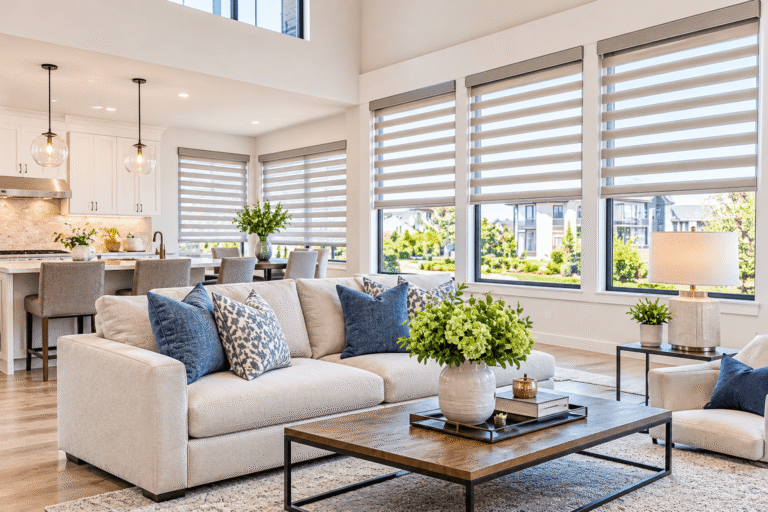
Blinds use horizontal or vertical slats that can be adjusted to control light and privacy.
They are a versatile option for homeowners who want to change how much sunlight enters a room throughout the day.
Popular considerations include:
- Adjustable slats for flexible light control
- Different materials, colors, and finishes
- Options for bedrooms, living rooms, and offices
- Manual or motorized operating systems, depending on the product
Custom blinds are worth considering when you want adjustable light control without completely covering the window with a solid fabric panel.
Explore custom window blinds to compare available options.
Custom Window Shades
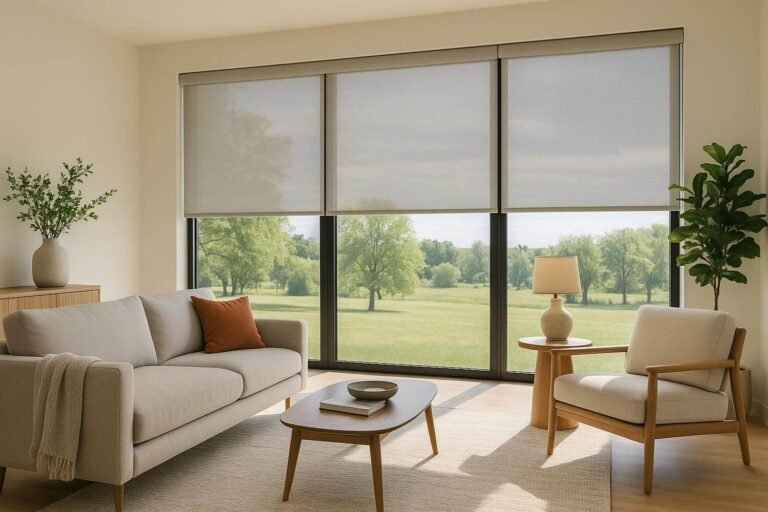
Shades use fabric or other continuous materials to cover the window.
Unlike blinds, most shades do not have adjustable slats. Instead, they are raised or lowered to control the amount of light entering the room.
Common shade styles include:
- Roller shades
- Solar shades
- Blackout shades
- Cellular shades
- Other fabric shade designs, depending on product availability
Shades are popular in modern homes because they offer a streamlined appearance and a wide selection of fabric choices.
Explore custom window shades to learn about available styles.
Plantation Shutters
Plantation shutters feature solid frames and adjustable louvers.
They offer a distinctive architectural appearance and allow homeowners to adjust the louvers for different levels of light and privacy.
Potential benefits include:
- A structured, built-in appearance
- Adjustable light control
- Different material options
- A range of finishes
- A classic style that complements many interiors
Plantation shutters are worth comparing if you want a more substantial window treatment rather than a fabric shade or slatted blind.
When choosing shutters, compare material, louver size, frame style, and the dimensions of your windows.
How to Choose Custom Window Treatments for Each Room
A common mistake is selecting the same window treatment for every room.
Although using one style throughout the home can create a consistent appearance, different spaces often have different functional requirements.
| Room | Window treatments to consider | Main priority |
|---|---|---|
| Master bedroom | Blackout shades or custom blinds | Privacy and light control |
| Living room | Roller shades, blinds, or shutters | Daylight and appearance |
| Kitchen | Suitable moisture-resistant blinds | Practical maintenance |
| Bathroom | Privacy-focused blinds or shades | Privacy and moisture considerations |
| Home office | Solar shades or adjustable blinds | Glare reduction |
| Media room | Blackout shades | Reduced incoming light |
| Guest bedroom | Blackout or room-darkening shades | Comfort and privacy |
The right choice also depends on window size, orientation, existing décor, and personal preferences.
How to Choose Custom Window Treatments for Light Control and Privacy
Light control is one of the most important reasons homeowners purchase custom window treatments.
Some people want to preserve outdoor views while reducing glare. Others prefer to block most incoming light, particularly in bedrooms.
Before choosing a product, understand the main fabric and light-control categories.
Light-Filtering Window Treatments
Light-filtering shades soften incoming daylight while allowing some natural light to enter.
They can be a good option for living rooms, dining rooms, and spaces where you want a bright atmosphere without direct sunlight.
Solar Shades
Solar shades use screen-like fabric designed to reduce glare while maintaining varying levels of visibility to the outdoors.
They are worth considering for sunny rooms, home offices, and windows with strong afternoon exposure.
Fabric openness affects how much light and visibility the shade allows. Compare different openness factors before choosing.
Room-Darkening Shades
Room-darkening fabrics reduce incoming light more than many light-filtering options, but they may still allow some light to pass through.
They can be useful in bedrooms and other spaces where moderate darkening is preferred.
Blackout Shades
Blackout fabrics are designed to prevent light from passing through the shade material.
However, light may still enter around the edges, depending on mounting and product design.
If maximum darkness is important, ask about outside mounting, side channels, and other light-gap reduction options.
How to Choose Custom Window Treatments Based on Material
Window treatment materials affect appearance, durability, maintenance, and performance.
For Orange County homeowners, it is particularly important to consider how sunlight, heat, and room conditions may affect the products over time.
Faux Wood
Faux wood blinds offer a wood-inspired appearance and are often considered for rooms where moisture resistance is important.
They can be a practical alternative to natural wood in some environments.
Natural Wood
Natural wood blinds provide warmth and a distinctive finish.
They are worth considering for living rooms, bedrooms, and interiors where natural materials are part of the design.
Ask about suitable applications and care requirements, especially in rooms with higher humidity.
Fabric
Fabric shades offer many design possibilities, including different colors, textures, patterns, and opacity levels.
The fabric you choose affects how much light enters the room and how the shade complements your interior.
Cellular Materials
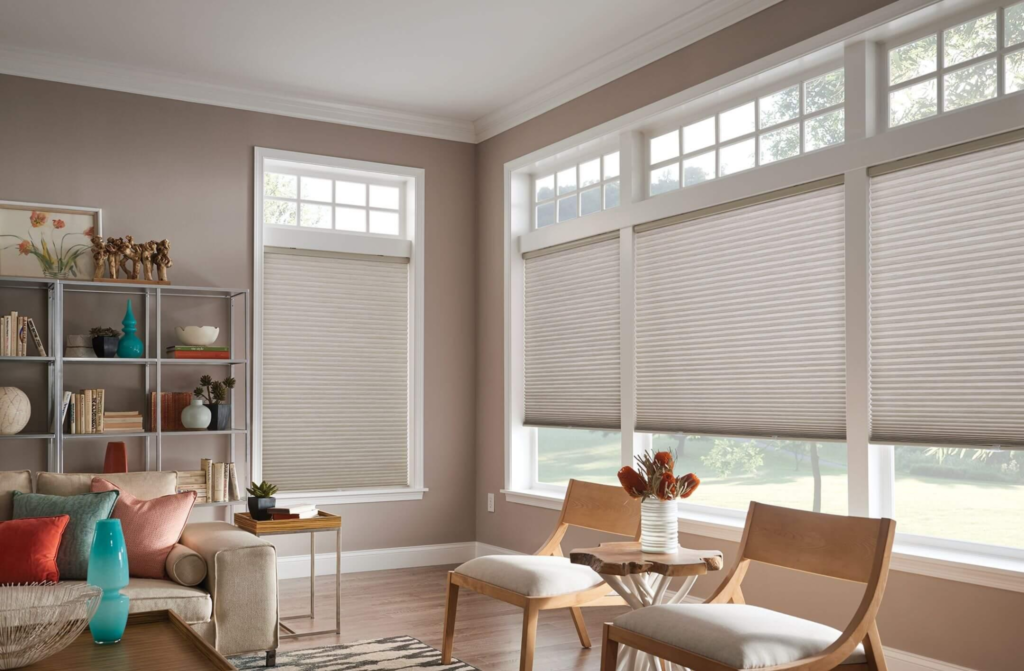
Cellular shades use a honeycomb structure that creates air pockets within the shade.
Depending on the product and window conditions, this construction can help reduce heat transfer.
When comparing materials, ask about cleaning instructions, durability, warranty coverage, and suitability for the room.
Should You Choose Motorized Custom Window Treatments?
Motorized window treatments are a convenient option for homeowners who want to control their blinds or shades with less manual effort.
Depending on the system, motorized products may operate using a remote control, wall switch, or compatible smart-home application.
Some systems also support scheduling and automation.
Benefits may include:
- Convenient operation for large windows
- Easier control of hard-to-reach windows
- Ability to operate multiple compatible shades
- Scheduling options on supported systems
- A streamlined appearance without traditional operating cords
Motorization can be particularly useful in homes with large windows, high ceilings, or multiple window coverings.
Before ordering, confirm the motor type, power requirements, control compatibility, and available automation features.
Explore motorized blinds and motorized shades to learn more.
How to Choose Custom Window Treatments: Inside Mount vs. Outside Mount
Mounting style affects the appearance, coverage, and fit of your window treatments.
There are two common approaches.
Inside Mount
An inside-mounted window treatment fits within the window frame.
Advantages include:
- A clean, built-in appearance
- More visible window trim
- A streamlined look
- Less projection into the room
However, the window frame must have sufficient depth and suitable dimensions for the selected product.
Outside Mount
An outside-mounted treatment is installed on the wall or trim surrounding the window.
Potential advantages include:
- Greater flexibility when window depth is limited
- More coverage beyond the window opening
- An option for reducing visible light gaps
- The ability to make a window appear larger
The best mounting style depends on the window structure, product specifications, and the appearance you want.
Always confirm mounting requirements before ordering.
How to Choose Custom Window Treatments That Match Your Interior
Window treatments are a visible part of your home’s design.
The right color and material can complement flooring, furniture, wall colors, cabinetry, and other finishes.
Here are a few practical guidelines:
- White and off-white: Create a bright, clean appearance.
- Beige and cream: Work well with warm and neutral interiors.
- Gray: Complements many contemporary designs.
- Natural wood tones: Add warmth and coordinate with wood furniture and flooring.
- Darker colors: Can create contrast and make a stronger design statement.
Consider whether you want the window coverings to blend into the room or become a visual feature.
If you are selecting treatments for several rooms, compare samples in the actual lighting conditions of your home before making a final decision.
How Much Do Custom Window Treatments Cost?
The cost of custom window treatments depends on several factors.
There is no single price that applies to every home because each project has different window dimensions, materials, features, and product requirements.
Factors that can affect product pricing include:
- Window width and height
- Type of blind, shade, or shutter
- Material and fabric selection
- Customization requirements
- Manual or motorized operation
- Control systems and accessories
- Number of windows being covered
Motorized products and specialty materials may cost more than basic manual options.
For an accurate estimate, provide the window measurements and explain the features you want.
It is also important to distinguish product pricing from installation costs. Blackout Blinds & Shutters sells window-covering products and does not provide installation services, so customers should arrange installation separately.
Are Custom Window Treatments Worth It?
Ready-made window coverings can work for standard window dimensions, but they may not provide the fit or customization some homeowners want.
Custom window treatments allow you to select products based on your actual window measurements and preferences.
Potential advantages include:
- More sizing options
- A wider choice of materials and finishes
- Product selection based on room requirements
- More control over light and privacy features
- Options for motorized operation
- A coordinated appearance across multiple rooms
Custom sizing is especially worth considering for large windows, unusually shaped openings, and homes with several different window dimensions.
Before ordering, verify measurements, mounting requirements, product specifications, and applicable warranty or return conditions.
Custom Window Treatment Buying Checklist
Before making your purchase, review this checklist:
- Identify the purpose of each window treatment.
- Measure every window according to the product instructions.
- Decide whether you prefer blinds, shades, or shutters.
- Choose the required level of privacy and light control.
- Compare materials and maintenance requirements.
- Select colors and finishes that complement your interior.
- Check inside-mount and outside-mount requirements.
- Consider motorized operation where convenient.
- Confirm product dimensions and specifications.
- Request pricing for your selected products.
- Arrange installation separately with an appropriate provider.
Comparing these details before ordering can help you avoid choosing a product that does not meet your expectations.
Frequently Asked Questions About Custom Window Treatments
What are the best custom window treatments for a home?
The best option depends on your needs. Custom blinds offer adjustable slats, shades provide a streamlined fabric-covered appearance, and plantation shutters offer a structured look with adjustable louvers.
Are custom blinds worth the investment?
Custom blinds can be worthwhile when you need specific window dimensions, materials, finishes, or light-control features. They offer more flexibility than many standard-size products.
What is the difference between blinds and shades?
Blinds typically use adjustable slats to control light and privacy. Shades use continuous fabric or another material that is raised or lowered to cover the window.
Are motorized window treatments worth it?
Motorized window treatments can be useful for large windows, high ceilings, and homeowners who want convenient remote or scheduled operation. The value depends on your preferred features and budget.
Which window treatments are best for sunny rooms in Orange County?
Solar shades, cellular shades, shutters, and other suitable blinds can all be worth considering. The right option depends on whether your main priority is glare reduction, privacy, light blocking, or insulation.
How do I measure windows for custom blinds?
Measurement instructions vary by product and mounting style. Measure the window width and height carefully, check available frame depth for inside mounting, and follow the selected manufacturer’s instructions before placing an order.
Can I get custom window treatments in Orange County, CA?
Yes. Blackout Blinds & Shutters helps homeowners explore custom blinds, shades, shutters, and motorized window-covering products. Contact the business to discuss available options and product pricing.
Does Blackout Blinds & Shutters provide installation?
Blackout Blinds & Shutters sells window-covering products but does not provide installation services. Customers should arrange installation separately.
Find the Right Custom Window Treatments for Your Orange County Home
Choosing custom window treatments becomes easier when you start with your priorities.
Think about how much light you want, how much privacy you need, which materials suit your rooms, and whether motorized operation would make daily use more convenient.
Whether you are comparing custom blinds, modern roller shades, cellular shades, plantation shutters, or motorized window coverings, selecting the right product can help create a more comfortable and coordinated home.
Ready to explore custom window treatments?
Visit Blackout Blinds & Shutters to explore window-covering options for your home.
Have questions about styles, customization, or product pricing? Contact Blackout Blinds & Shutters to discuss your requirements.